
Her på Blåvand's blog bringes korte nyheder i dagbogsformat om livet og hændelser på fuglestationen.
-
FORSIDE

- Blog
An early surprise: Sydlig Nattergal in the net!
mandag 13. april 2026
Observations :
That was quite a foggy day!
We had to stop our observations short because we could no longer see the reef clearly.
Still, when conditions allowed, we spotted around 90 common terns [fjordterne] feeding near the reef, a group of 120 great cormorants [skarv] resting in the waves, and a white-tailed eagle [havørn] flying over the shore!
Todays observations can be seen here. 
Making some sketches of resting birds on the beach - here great black-backed gulls [svartbag] - , by Clara
Ringing :
This morning turned out to be less foggy as forecasted and it seemed like the clear and calm night made some birds migrate.
The first round was already quite exciting: From far a saw a rather big passerine with a orange tail in the net. It was quite a surprise to find a Common Nightingale “Sydlig Nattergal” in the net!! Especially as so few other Long-distance migrants had arrived in the nets so far.
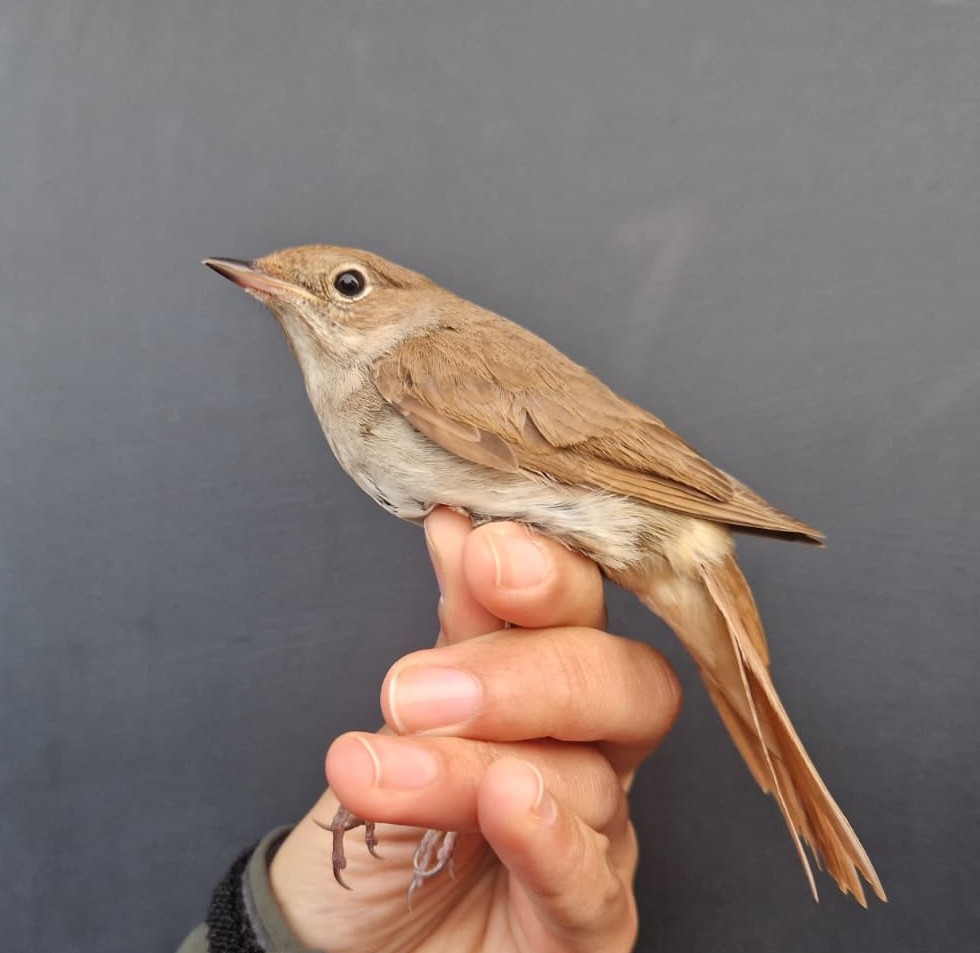 A very early Common Nightingale "Sydlig Nattergal". Picture by Rose.
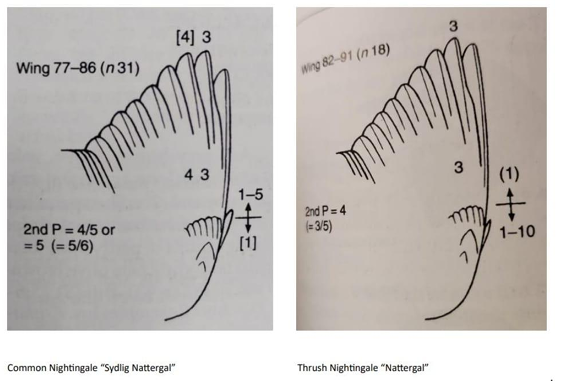
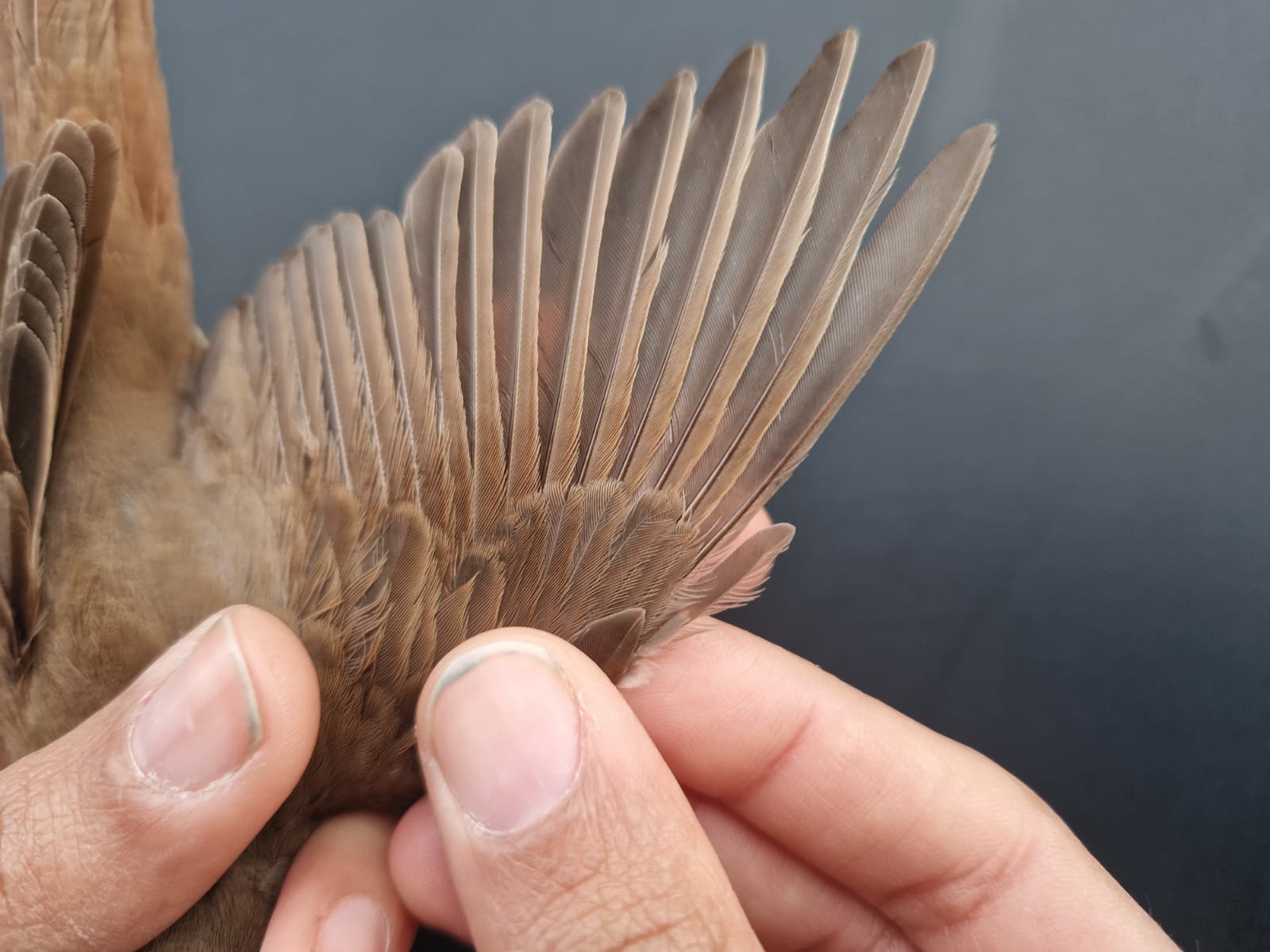 Apart from their difference in plumage colour, the Common Nightingale "Sydlig Nattergal" and the Thrush Nightingale "Nattergal" differ in the lenth of P1. The Nightingale has a very long P1 in the lenth of the primary couverts or a little longer, while the Thrush Nightingale has a very short P1, see in the next picture.
After showing the bird to Clara and Jorn, it was released. A very early Nightingale, but that will just be beneficial for it. Usually in passerines, it is the males, that are migrating earlier than the females. We cannot sex Nightingales but considering that it had a long wing measurement in its range it is more likely, that it is a male. The males arriving early at their breeding sites will occupy the best territories. Therefore, it is very likely that they will be chosen by a female – it is the female´s choice, which mating partner they take – and they hopefully they will have good breeding success. I wonder what the destination of that Nightingale is. We can just wish it a safe flight!
The day also brought Willow Warbler “Løvsanger” no. 2 and 3 for the season.
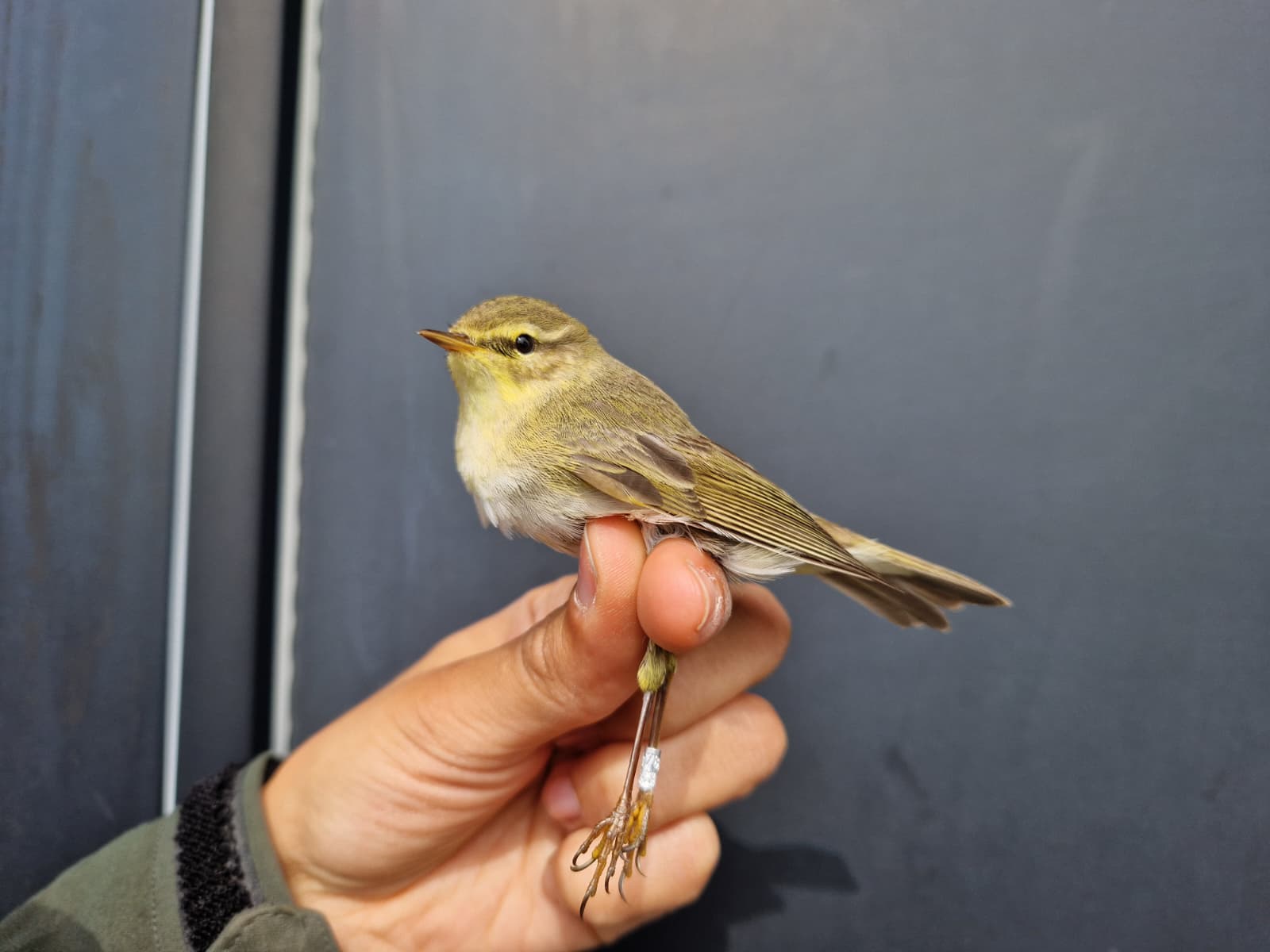 Willow Warbler "Løvsanger". Picture by Rose.
I kept the nets in the station garden open for a little longer after standard and caught another Blackcap “Munk” and some more Chiffchaffs “Gransanger”. We had over 19 today!
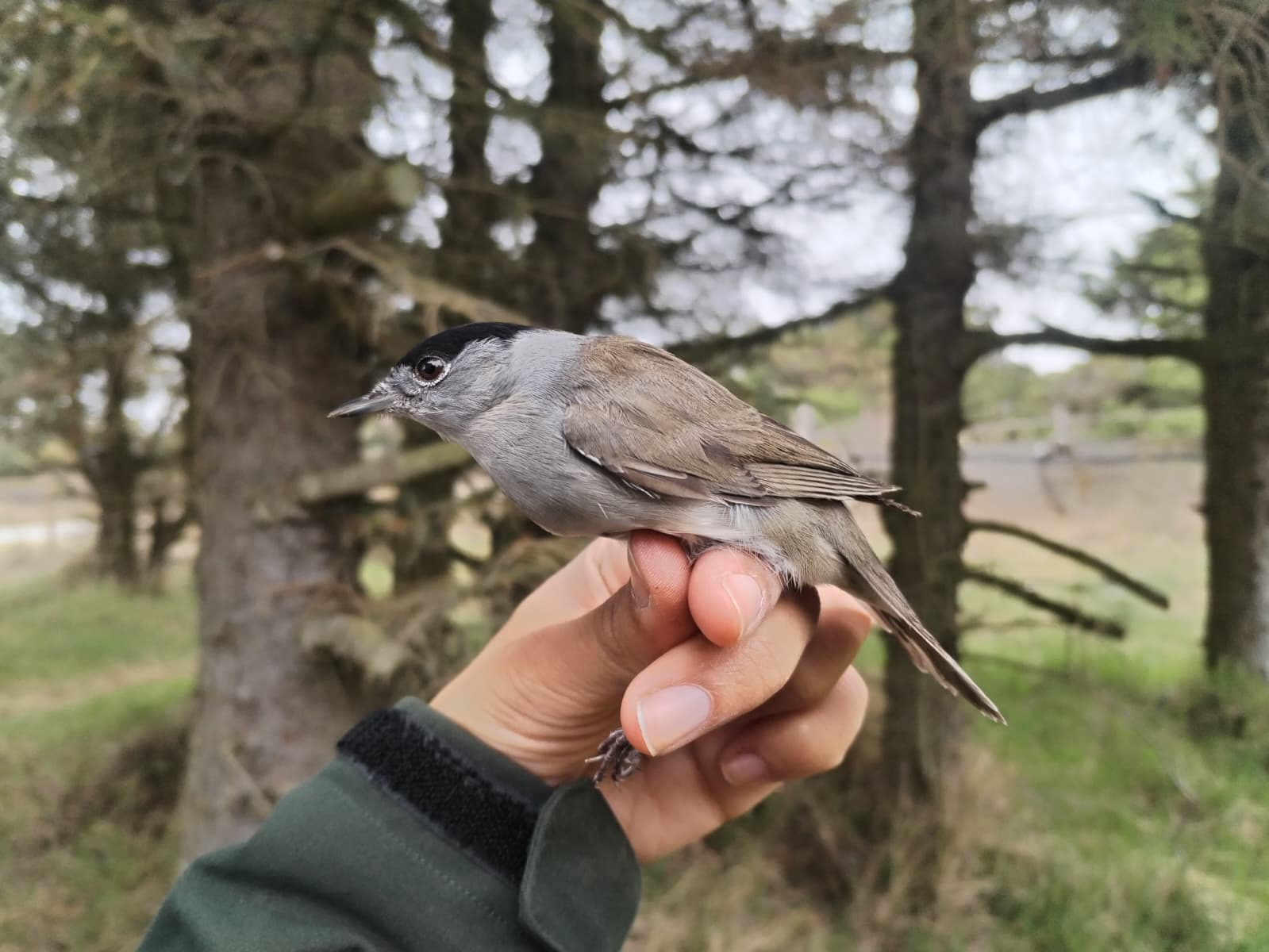 Blackcap "Munk". Picture by Hanelie.
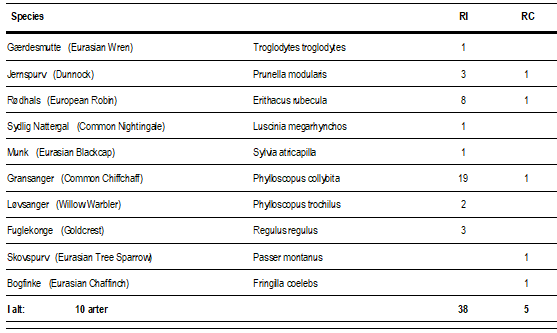
We also washed all bird bags today and I did some more data checking.
I also observed a Great Tit snacking one of my moths today. I was not so delighted by that. I might move the trap. I caught many moths today but only four well known species from the last Days. Mainly Xylocampa areola “Gedeblad-ugle”.
Tomorrow we might not be able to ring in the morning, the forecast shows rain. But let´s see. My alarm is always ringing at the usual opening time.
At the station: Clara Delahaye, Rosemary Frikke, Hanelie Sidhu & Jorn de Jong