
Her på Blåvand's blog bringes korte nyheder i dagbogsformat om livet og hændelser på fuglestationen.
-
FORSIDE

- Blog
Divers and gannets don't mind the rain
tirsdag 29. september 2026
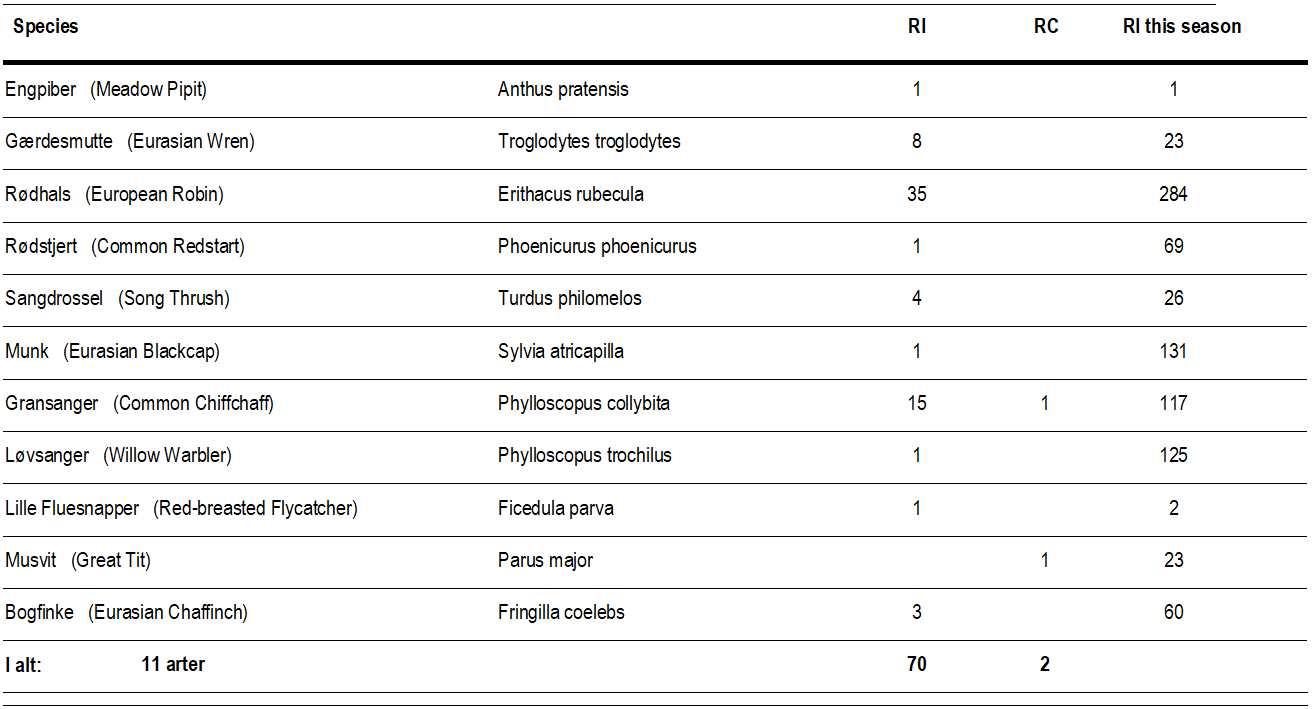
Ringing: A surprisingly good day of ringing today! Even though we had to close halfway through the standard in the morning due to rain, we opened up again after the rain stopped in the afternoon, and got a total of 72 birds today.
Johan got to practice some more today in both labs, since I got my new license, Strummer and I are more flexible. He also got some of the cutest and trickiest birds around - the flying meatball, the tangled mess, the escape artist, the Wren (Gærdesmutte). Kært barn har mange navne.
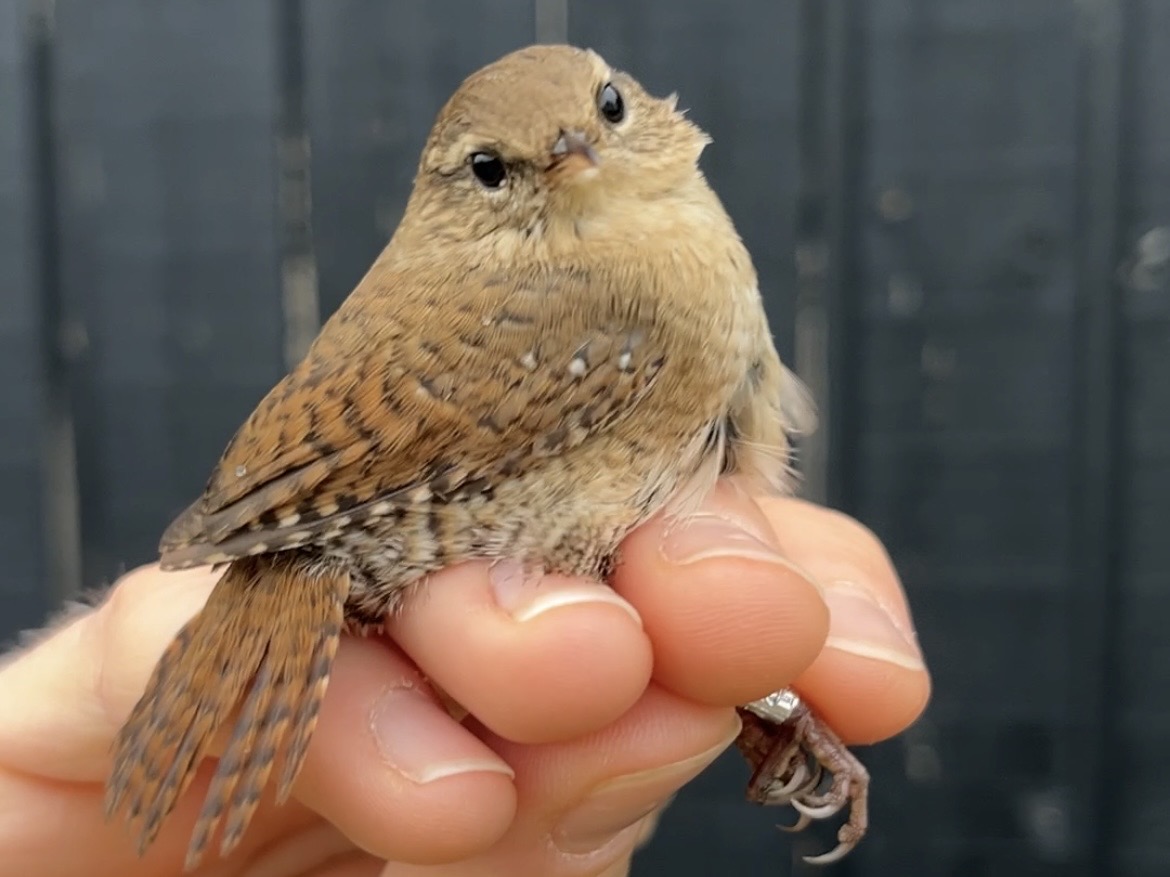 We had the most adorable Wrens today - just look at this one! Picture by Mathilde Sif Eiby.
The lighthouse garden was significantly busier than the station garden today, but I still found another Red-breasted Flycatcher in one of the station nets, that I could surprise Strummer with. Two in one week!
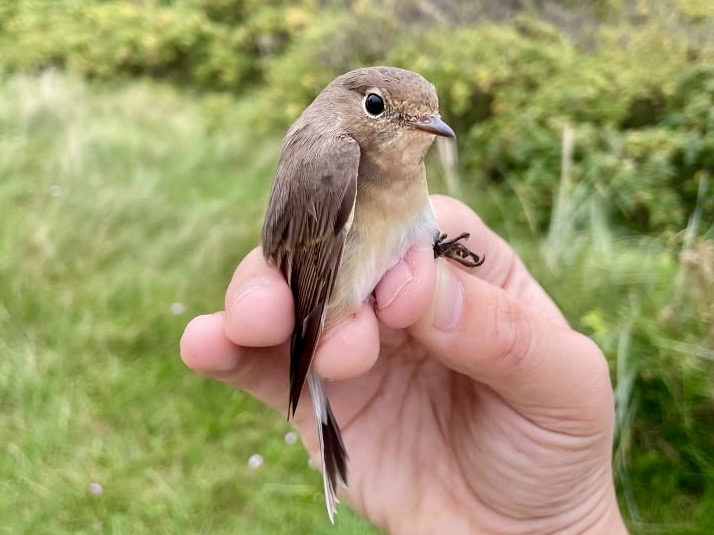 Our second Red-breasted Flycatcher in a week! Picture by Strummer Edwards.
In the afternoon Storm was helping out Strummer at the lighthouse, and they somehow got a Meadow Pipit (Engpiber) in our Helgoland Trap! As it was the first Pipit I've seen in hand, I even got to ring it - what a treat, and our first this season too!
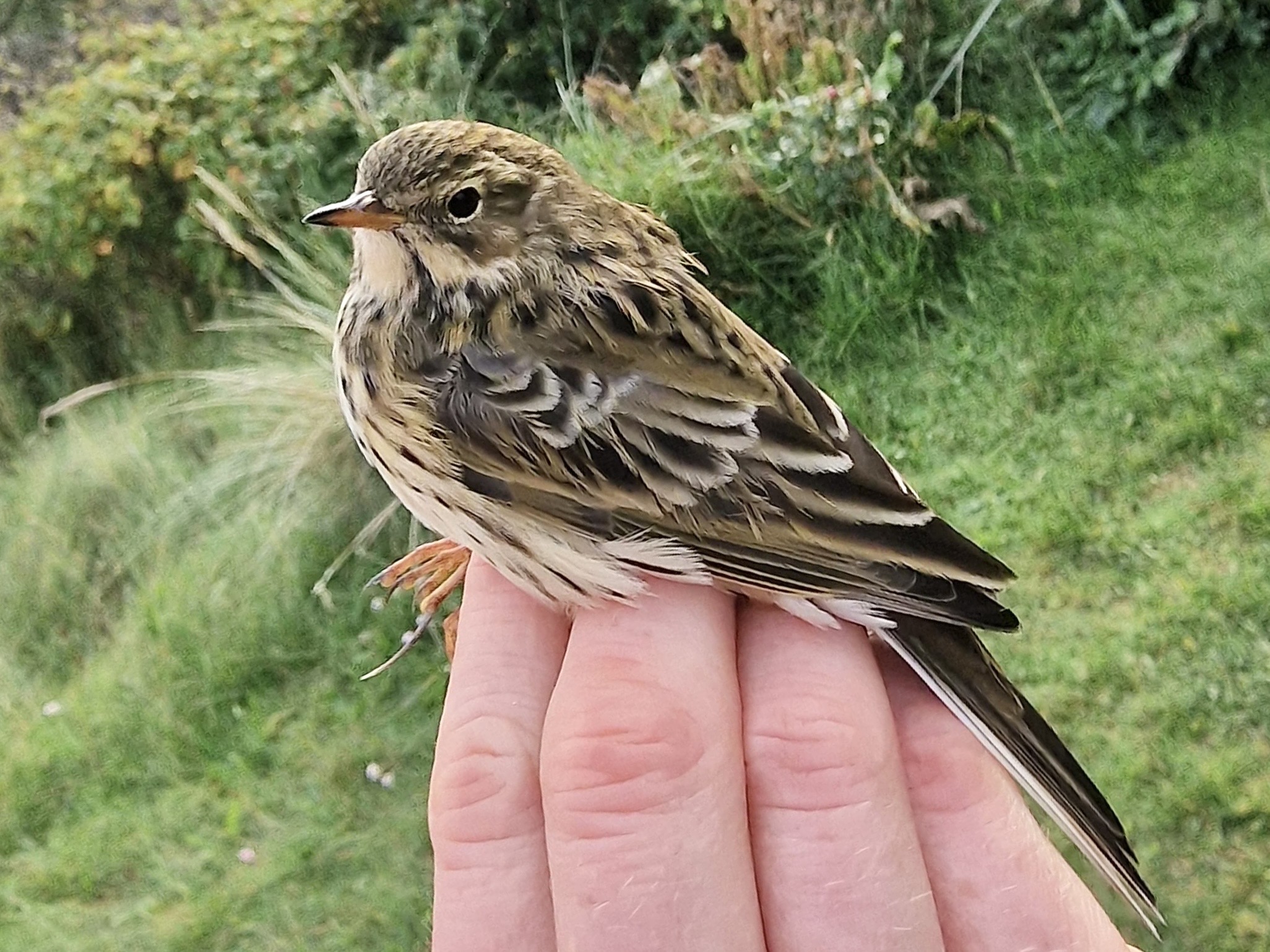 The Meadow Pipit from today. Look how long that back claw is! Picture by Anton Ræbild Jensen.
Today's numbers:
Observation:
Despite some morning drizzle, the migration obs went pretty well with a steady number of common scoters (Melanitta nigra). This was also a great day for red-throated divers (Gavia stellata) with several flocks of up to 6 individuals flying past. A total of 143 individuals were counted today!
Near the end of standard time, the rain sadly worsened our visibility quite a bit. However, it did draw the gannets (Morus bassanus) closer to the coast, giving us a great view of them flying past. A total of 47 gannets were counted, a great number compared to the last few days I (Storm) have been on observation. Gannets are some of my favourite sea birds and it was nice to learn how to age them from Anton. It is relatively easy as they change their plumage yearly between the 1st and 5th year from a uniform brownish, slowly turning their iconic white with black wingtips.
There were not many other species of note today, and almost no passerines due to the unfavourable weather conditions. Sadly we did not see the local great skua (Stercorarius skua) today but we hope it's doing well wherever it has gone.
At the station: Strummer Edwards, Mathilde Sif Eiby, Anton Ræbild Jensen, Storm Borum and Johan Them Steffensen